Latest news
Press Release: Oxford Ethicists Expose the “Con” in Conservation
2nd February 2026
Predator Control cover 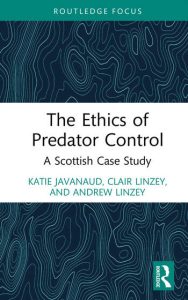 Three Oxford ethicists expose the “con” in conservation in a new book titled The Ethics of Predator Control – A Scottish Case Study.
In a rebuttal to claims by the Game and Wildlife Conservation Trust (GWCT), the book claims that the killing of predators on moors in Scotland “serves the purpose of supporting the grouse-shooting industry rather than conservation.” They go on to state that “the appeal to conservation is little more than a cover to continue the GWCT’s ‘management’ practices.”
Over 260,000 animals are killed in the name of predator control each year on Scottish moors. Targeted animals include foxes, weasels, stoats, rats, rabbits, crows, magpies, jackdaws, and jays. In practice the methods also kill pine martens, hedgehogs, badgers, deer, hares, capercaillie, and raptors. Control methods including traps, poisons, and the now banned snares, cause considerable suffering, or at the very least render animals liable to suffering.
The criticism from the GWCT appeals to selected scientific literature that supposedly supports predator control as a method of conservation. However, on closer inspection the very literature they cite indicates that predator control more often fulfils the “primary objective of game managers (larger shooting bags) but less often the objective of conservation managers.” Thus, the appeal to conservation is by their own admission simply cover to support the grouse-shooting industry.
Moreover, the con in conservation is exposed by the fact that the traps set for predators often kill the very animals they say are conserved by killing predators: 39% of animals caught in spring traps are not targeted species, which include endangered species, such as raptors and capercaillie.
The new book authored by Katie Javanaud, Clair Linzey and Andrew Linzey defends the original report by the Oxford Centre for Animal Ethics, titled Killing to Kill written for members of the Scottish Parliament. Over 120 scholars worldwide have endorsed the original report.
Joint author, Andrew Linzey says: “The suffering inflicted on animals in predator control represents a lacuna in moral thought.” He continues, “We kill animals that kill out of necessity so that we can kill other animals for sport – the logic that could defend this position would have to be grotesque.”
The Ethics of Predator Control is published by Routledge and is available to purchase here and on Amazon
Notes for Editors:
Dr Clair Linzey is available for interview, comment and articles.
PDF copies of the book are available for review.
For media enquiries please contact Sophie at Panpathic Communications –Sophie@panpathic.com / 07815 860 082
About the book and its editors
- Dr Katie Javanaud is a fellow of the Oxford Centre for Animal Ethics. She is also a Visiting Lecturer and Researcher in the Department of Religion at Princeton University, where she is also affiliated with the University Centre for Human Values.
- Dr Clair Linzey is a research fellow in animal ethics at Wycliffe Hall, University of Oxford and is Deputy Director of the Oxford Centre for Animal Ethics. She is the author of Developing Animal Theology(Routledge, 2021).
- The Revd Professor Andrew Linzey is Director of the Oxford Centre for Animal Ethics. He has held the world’s first post in theology and animals in the University of Oxford, and has been a member of the Faculty of Theology at the University of Oxford for 28 years. He is author of Why Animal Suffering Matters (Oxford University Press, 2009).
- The Oxford Centre for Animal Ethicsis an independent centre pioneering ethical perspectives on animals through academic research, teaching, and publication. The Centre comprises more than 100 academic Fellows.
Web: www.oxfordanimalethics.com/home
Instagram: @oxfordanimalethics
YouTube: https://www.youtube.com/@oxfordanimalethics